Ask ten companies why they sponsor a race team and most will say the same thing: exposure. Ask them what that exposure actually got them, and the answers get a lot quieter.
That quiet is the whole problem.
Exposure sounds like a benefit until you try to spend it. You can’t take it to the bank, you can’t hand it to a client, and at the end of the season you can’t point to the line on a spreadsheet where it paid you back. So before we talk about what sponsoring Courage Motorsports gives you, let’s be honest about what it doesn’t. It doesn’t give you a stadium full of strangers who’ll forget your logo by Monday. That was never the product.
Here’s the thing a regional company needs to hear first. You don’t need what a national sponsorship sells. A seven-figure deal at the top of the sport buys reach: millions of eyes, a number so big it stops meaning anything. A regional business doesn’t win in millions. It wins in its own backyard, with the right people, in the right room. Different scale. Different math. Different definition of a win. And once you measure success that way, a grassroots team isn’t the cheap version of a national one. It’s a different thing entirely, and for a lot of companies it’s the better one.
Start with access, because access is the part the big leagues can’t sell you back at any price.
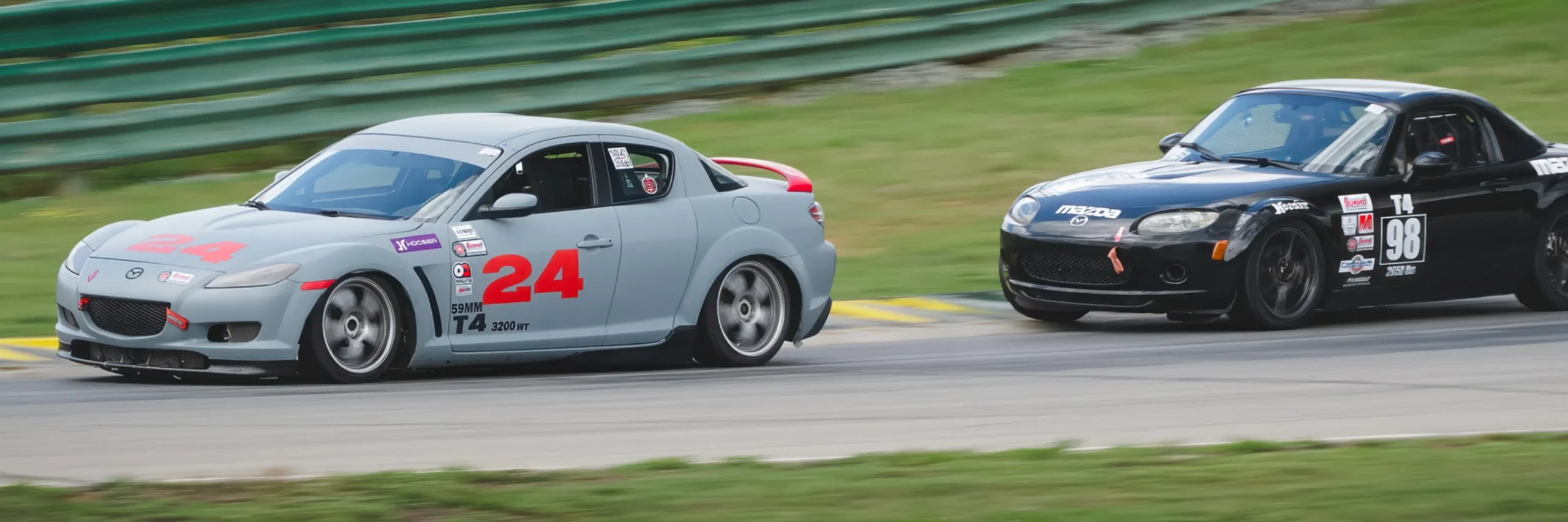
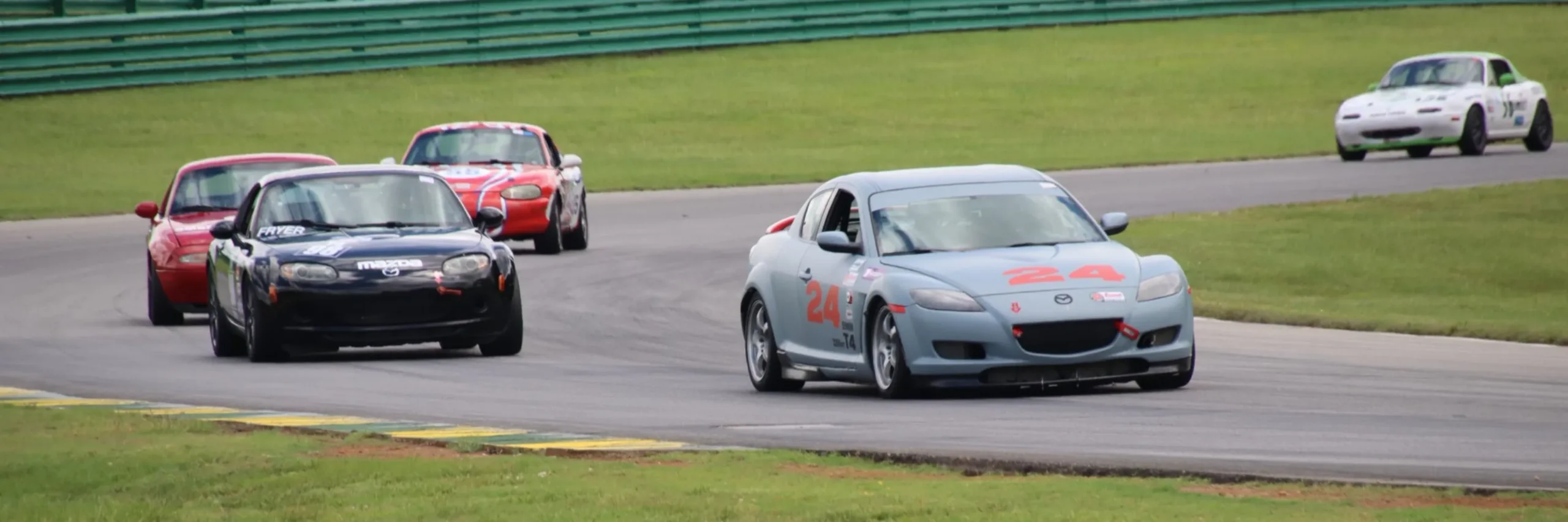
At the national level, the paddock is a fortress. Credentials, motorhomes, handlers, a velvet rope between the people writing checks and anything real. You pay a fortune to stand outside the thing you’re funding. At our level, that wall doesn’t exist. You walk in. You stand at the trailer. You watch the work happen at arm’s length, with other teams doing the exact same thing a few feet away, someone walking over to borrow a tool, everybody chasing the same lap on the same weekend. There’s a community to it that nobody has to explain to you. You feel it the second you’re standing in the middle of it.
And when you ask a question, you get an answer from Alex. Not a rep. Not a media handler reading off a card. The owner, the person actually doing the work, telling you straight how a race operation runs across a weekend. Those key people exist at every level of this sport. The difference here is that nothing stands between you and them.
That access doesn’t reset every year either. At the top, a sponsorship is a contract that expires and gets renegotiated, sometimes outbid and walked away. Down here, sponsors become regulars. They show up. They text. They go from the company that pays us to the person who’s part of this. That isn’t a sales line. It’s just what proximity does to people who keep showing up for the same thing.
Here’s where we get honest about the work, because the race weekend is the hook, not the job. The weekend builds a connection to the sport you don’t forget. The actual return gets built off the track, in the long stretch between races, and it shows up two different ways depending on who you are.
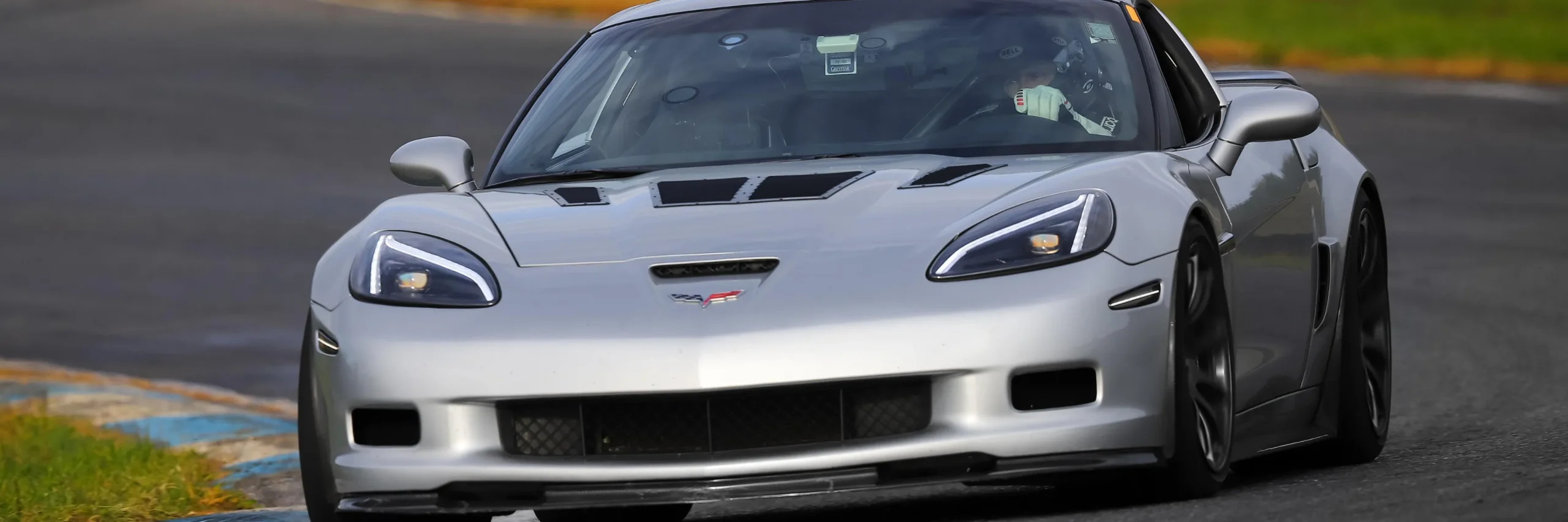
If you’re a company that markets itself, the return is content. Photos and posts built around something real and high-performance, fuel for your own feeds that you’d never get from a stock image or another round of ads. You put your name next to a race car and you look like a different kind of company than the one running the same banner ad as everyone else. That isn’t theory. One of our own partners runs a web shop, and the race photos go straight into their social feeds and their portfolio. Fair warning, that situation is a little unique. But the principle holds for anyone: you get content you can actually use.
If you’re a company that runs on client relationships, the return is the weekend itself. You don’t close a deal by taking a prospect to a billboard. You take them to the paddock, hand them the experience, let them stand next to the car when it fires up, and the relationship moves in a way no ad ever could. A billboard can’t do either of these things. It can’t hand you content and it can’t host your client. Racing does both.
There’s one more reason, and it’s a good one. When you back this team, you’re helping put someone in a seat. That’s been the deal in grassroots racing forever. It’s the rung people climb to get anywhere in this sport, and most drivers can’t make that climb alone. A regional company gets to say it was part of one. That’s worth something you can’t buy in a marketing package.
Now the part that’s hard to put on a page. The first time you stand next to one of these cars as it fires up, something changes. The sights, the smell of fuel and rubber, and depending on the car, that chest-pounding concussion of the engine going off right next to you. But that’s not what makes you a fan. What makes you a fan is that the driver isn’t nameless anymore. You met them. You know them. So when the car comes around, you want it to do well, and your stomach is in it. The relationship comes first. The spectacle just turns the volume up on a connection that’s already personal. That’s the opposite of watching on a screen, and it’s the one thing we genuinely can’t hand you through one. You have to be there.
So how do you know it worked? Part of the honest answer is that the best of it doesn’t come with a number. The experience, the association, the pride of pointing at that car and saying that’s us. You have to be okay with some of the return living there. The rest of it you can measure the normal way: social reach, new followers, the online marketing fundamentals every campaign tracks. Those are real and they’re there. But they’re the floor, not the reason. The reason is the part the dashboard can’t capture.
Which brings it back around. We started with companies that can’t tell you what their exposure got them. Here’s the other version. Picture your logo on the car. Not as a line item, not as a banner you’ll forget, but on a car you have a real connection to, in a sport you finally understand from the inside. Sit with that image for a second.
If you can see it, you already know what the exposure got you.